Moroccan pottery: Safi, Fes and Tamegroute styles, prices, and is it food safe?
By Souvenir Express team · Published 16 October 2026
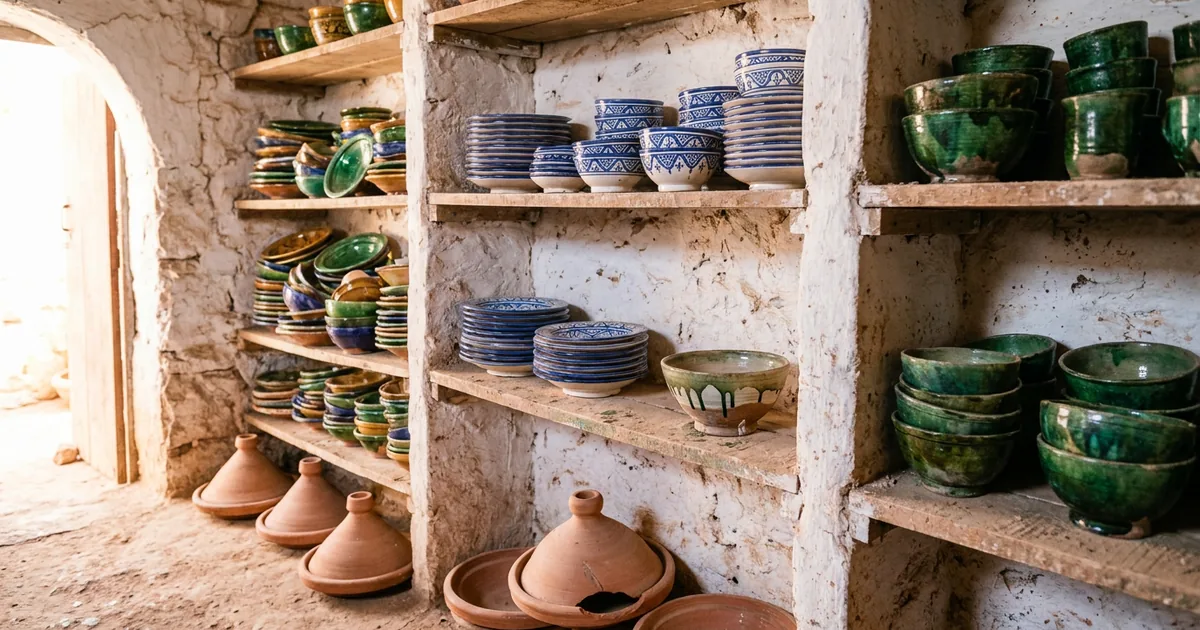
Short answer: Moroccan pottery comes mainly from Safi (bright, multicoloured glazes), Fes (blue on white) and Tamegroute (deep green glaze). Treat painted, glazed pieces bought on a trip as decoration: US, Canadian and New York City health authorities warn that traditional glazes from countries including Morocco can contain lead. A small decorative tagine costs about 100 to 140 MAD in the souks after bargaining.
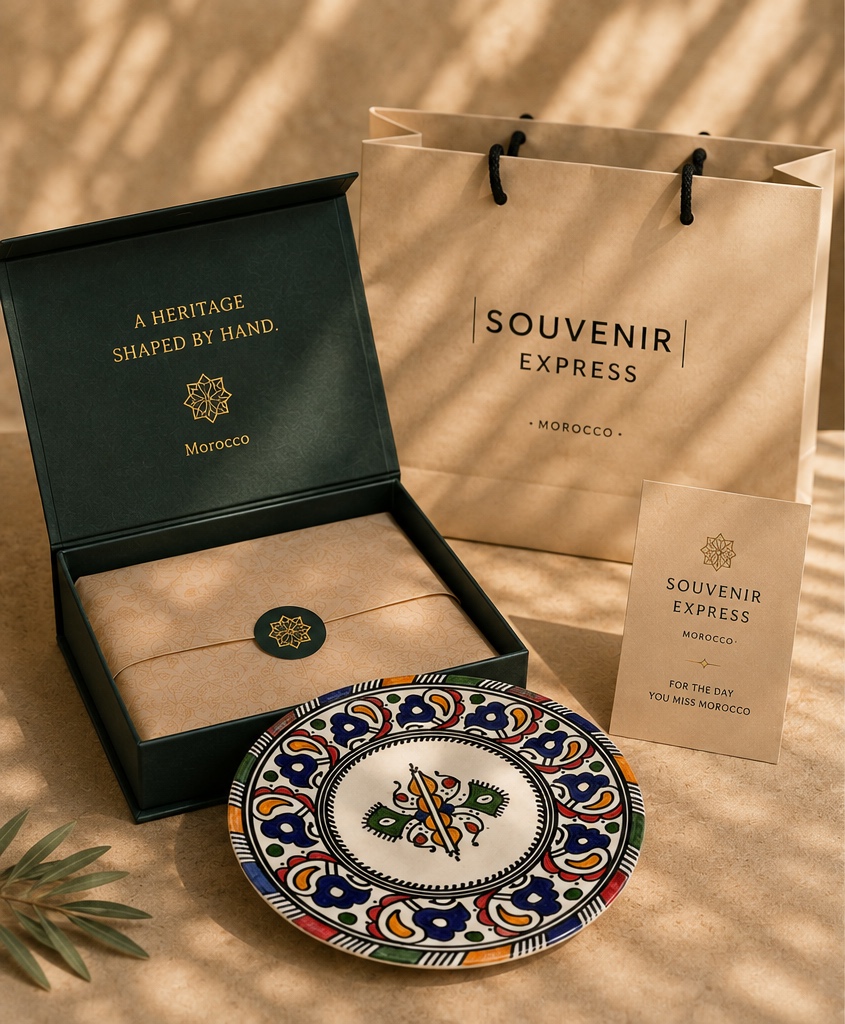
Assiette Héritage
Hand-painted decorative ceramic plate
400 MADView
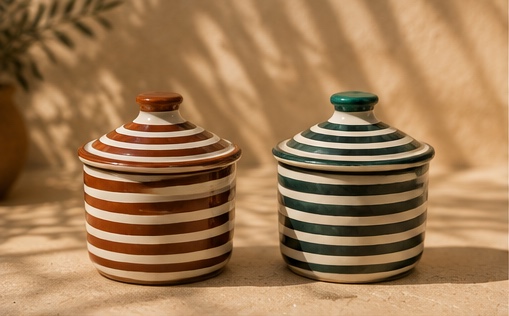
Duo Dar
Two hand-decorated ceramic pots from Safi
200 MADView
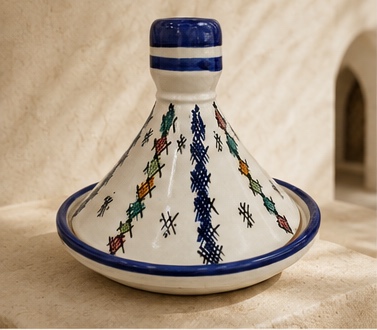
Tajine en Céramique
Handmade, hand-decorated ceramic tagine
250 MADView
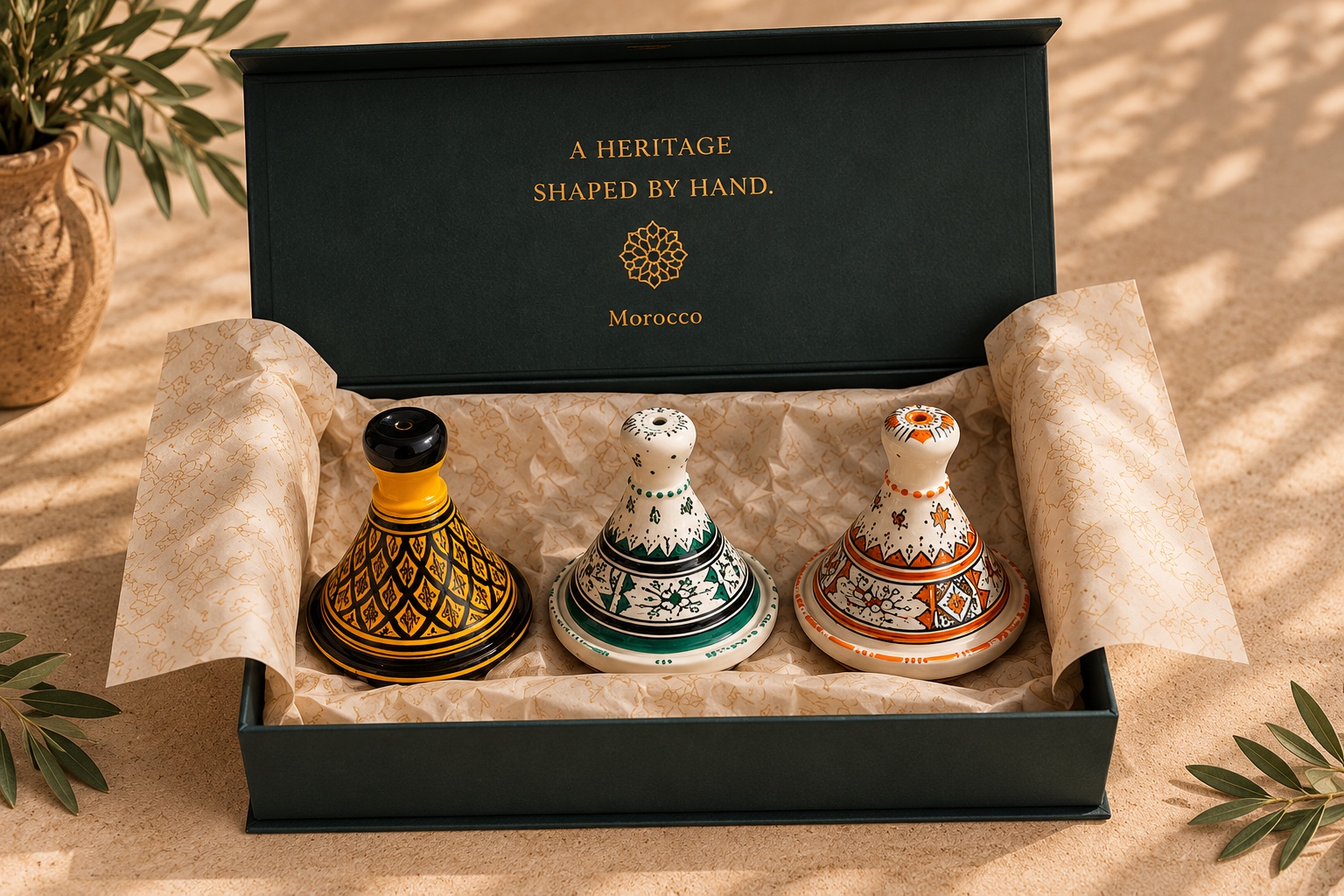
Trio Mini Tajines
Box of 3 hand-decorated mini tagines
400 MADView
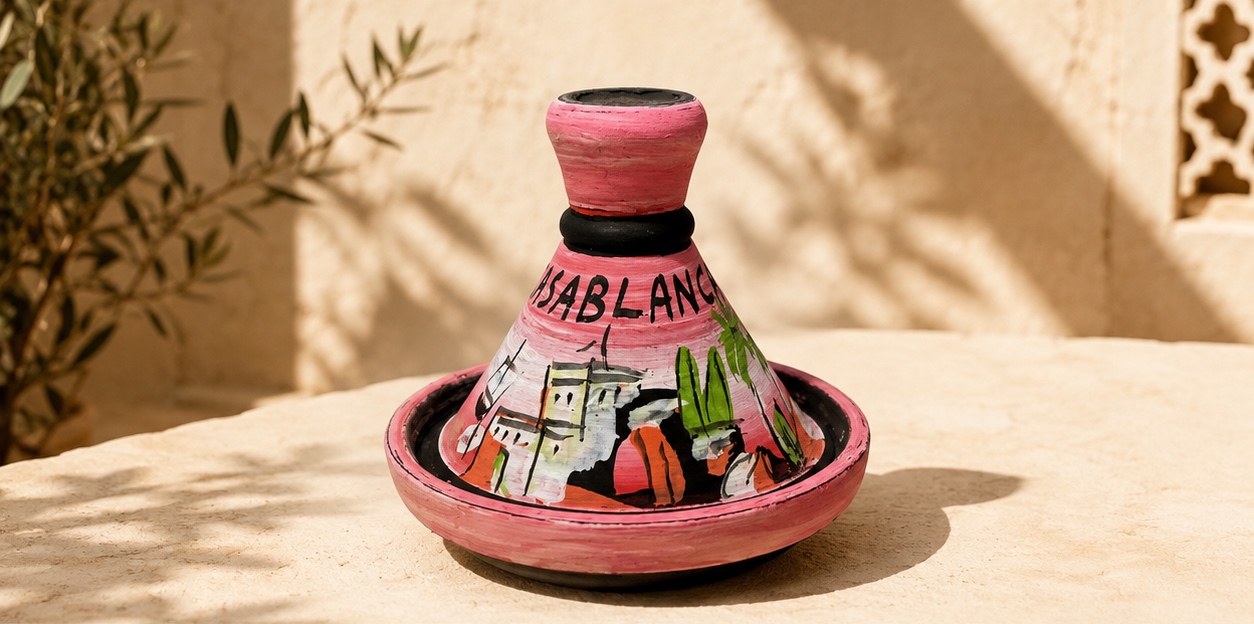
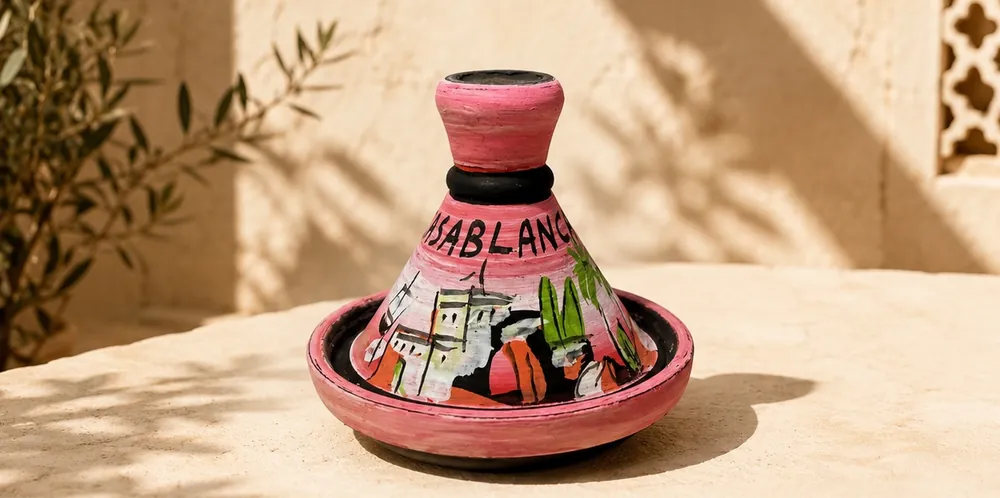
Mini Tajine Casablanca
Hand-painted decorative pottery mini tagine
180 MADView
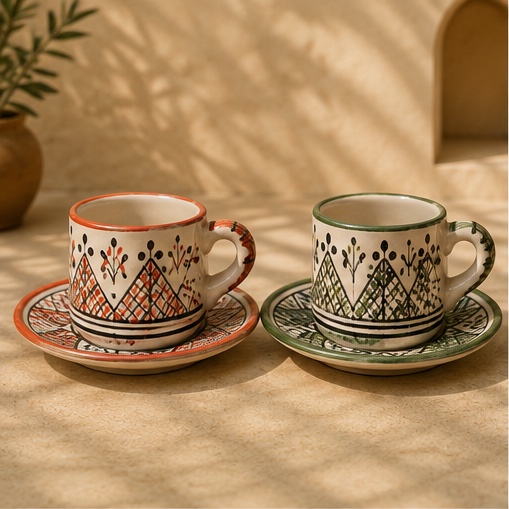
Terre Café Duo
Two hand-decorated ceramic coffee cups
250 MADView
Where does Moroccan pottery come from?
| Region | Style | Colours | Typical pieces |
|---|---|---|---|
| Safi, Atlantic coast | Heavily glazed, multicoloured | Strong greens, blues, ochres | Plates, bowls, pots, tagines |
| Fes | Fine painted decoration, "Fes blue" | Blue on white | Plates, bowls, serving dishes |
| Tamegroute, near Zagora | Rustic earthenware | Deep, irregular green glaze | Bowls, cups, small dishes |
You will find all three styles in the souks of Marrakech, Fes and Casablanca. Ask where a piece was made: sellers usually know the town or the workshop.
Is Moroccan pottery food safe?
Not by default. Lead can be present in the glaze or the decoration of traditional pottery, and badly fired lead glazes can release it into food and drinks.
- Health Canada advises against cooking, serving or storing food in glazed ceramics obtained outside Canada, such as souvenirs, because they may contain more lead or cadmium than Canadian limits allow.
- The US Food and Drug Administration lists the pieces most likely to be a problem: handmade with an irregular shape, antique, damaged or worn, bought from street vendors or from an unverifiable source, and brightly decorated in orange, red or yellow.
- New York City's health department names Morocco among the countries whose traditional ceramics may contain high levels of lead.
Washing or boiling does not remove lead. If you want to use a piece for food, the FDA suggests testing it with a lead test kit, or buying cookware sold for that use by a manufacturer you can identify.
Assiette Héritage
Hand-painted decorative ceramic plate
400 MADView
Duo Dar
Two hand-decorated ceramic pots from Safi
200 MADView
Tajine en Céramique
Handmade, hand-decorated ceramic tagine
250 MADView
Trio Mini Tajines
Box of 3 hand-decorated mini tagines
400 MADView
Mini Tajine Casablanca
Hand-painted decorative pottery mini tagine
180 MADView
Terre Café Duo
Two hand-decorated ceramic coffee cups
250 MADView
Which pieces should you keep for display only?
The FDA's list of higher-risk pottery doubles as a checklist when you shop:
| Check | Keep it for display if… |
|---|---|
| Label | It says "Not for Food Use—May Poison Food", or carries no maker information |
| Shape | It is handmade with a crude appearance or an irregular shape |
| Colours | It is brightly decorated in orange, red or yellow |
| Condition | It is antique, chipped, cracked or worn |
| Where you bought it | From a street vendor or a source you cannot verify |
A painted plate on a wall or a mini tagine on a shelf carries no risk. For cooking, buy a piece sold as cookware by a seller who can name the maker.
How much does Moroccan pottery cost?
Prices from 2025-2026 souk guides, mostly Marrakech, after bargaining:
| Piece | First price quoted | After bargaining |
|---|---|---|
| Small decorative tagine | 250 to 320 MAD | 100 to 140 MAD |
| Ceramic cooking tagine | 350 to 450 MAD | 150 to 220 MAD |
Expect to settle at 40 to 60 % of the first price in the souks. The state-run Ensemble Artisanal shops sell at fixed prices, useful to compare before bargaining.
How do you pack ceramics for a flight?
- Carry small pieces in your hand luggage rather than in the hold.
- Wrap each piece in clothes, and put plates on edge in the middle of the bag rather than flat against the shell.
- Fill tagine lids and bowls with socks or soft items so they cannot crack under pressure.
- Keep the lid of a tagine wrapped separately from its base.
Moroccan pottery delivered to your hotel
Souvenir Express selects decorative ceramics, including hand-decorated pots from Safi, plates and mini tagines, and delivers them ready to give.
- Delivered within 24 hours, free, anywhere in Morocco, to your hotel reception or address. An express option delivers in under an hour, for a fee shown at checkout.
- Ready to give: orders arrive wrapped and ready to offer; our boxed sets come in a dark green gift box with gold lettering.
- Pay by card or cash on delivery. Returns are accepted for 14 days after delivery, with return shipping on us.
Our painted pieces are sold as decorative objects, to display rather than to cook in.
More guides: the best souvenirs from Morocco and what they cost and what to buy in Marrakech.
FAQ
Is Moroccan pottery lead free?
You cannot assume it is. US, Canadian and New York City health authorities warn that traditional glazed ceramics, including from Morocco, can contain lead. Keep painted pieces for decoration unless the maker states they are made for food.
Can I cook in a Moroccan tagine?
Only in a tagine sold for cooking by a seller who can tell you how it was made. Painted decorative tagines are not meant for food.
What is Fes blue pottery?
Pottery from Fes decorated in blue on a white background. It is one of the three best-known Moroccan styles, with Safi's multicoloured glazes and Tamegroute's green glaze.
Does washing remove lead from pottery?
No. According to the FDA, washing or boiling does not remove lead from a glaze.
How much does a decorative tagine cost in Morocco?
About 100 to 140 MAD for a small one after bargaining, for a first price of 250 to 320 MAD, according to 2025-2026 souk guides.
Sources
- US Food and Drug Administration, Questions and answers on lead-glazed traditional pottery
- Health Canada, Safe use of cookware
- NYC Department of Health, Hazardous ceramics and dishware
- Regional styles and souk prices: 2025-2026 guides to Moroccan pottery and souks, checked in October 2026