Moroccan decor: 6 ceramic pieces to dress your home
By Souvenir Express team · Published 17 November 2026
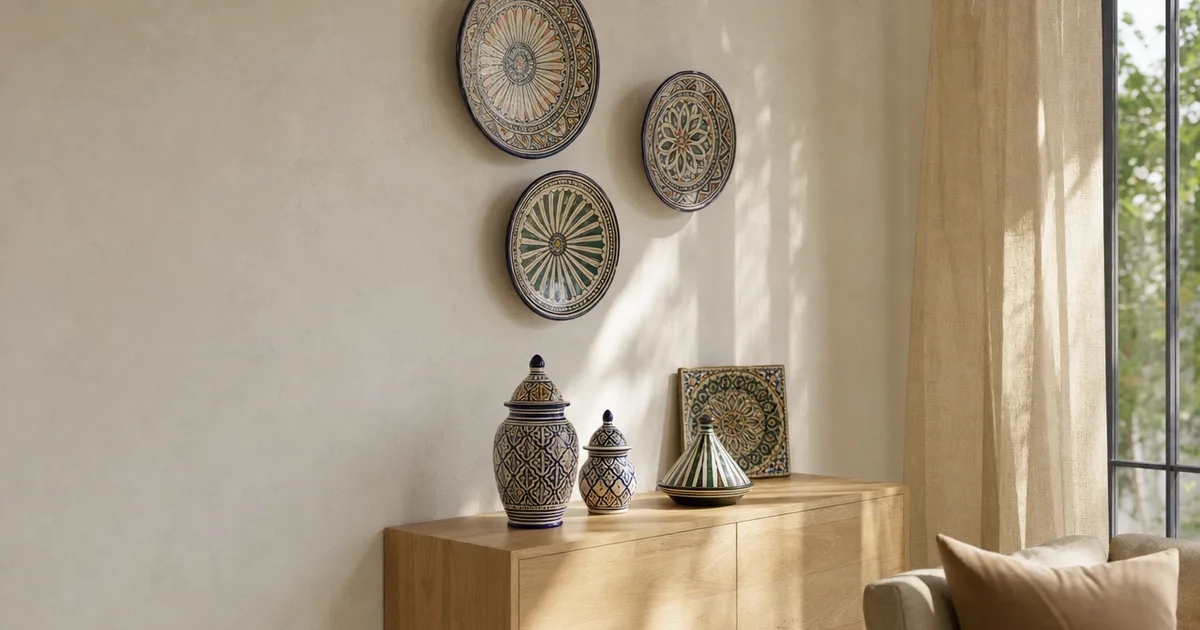
The simplest way into Moroccan decor, without redoing a whole room, is ceramics: a lidded jar on a shelf, a decorative tagine on a console, a carved tray or a few plates on the wall are enough to bring in its colours and patterns. One or two well-placed pieces do more than a complete set.
Here are six families of ceramics from our selection, what gives each its character, and how to combine them in a home today.
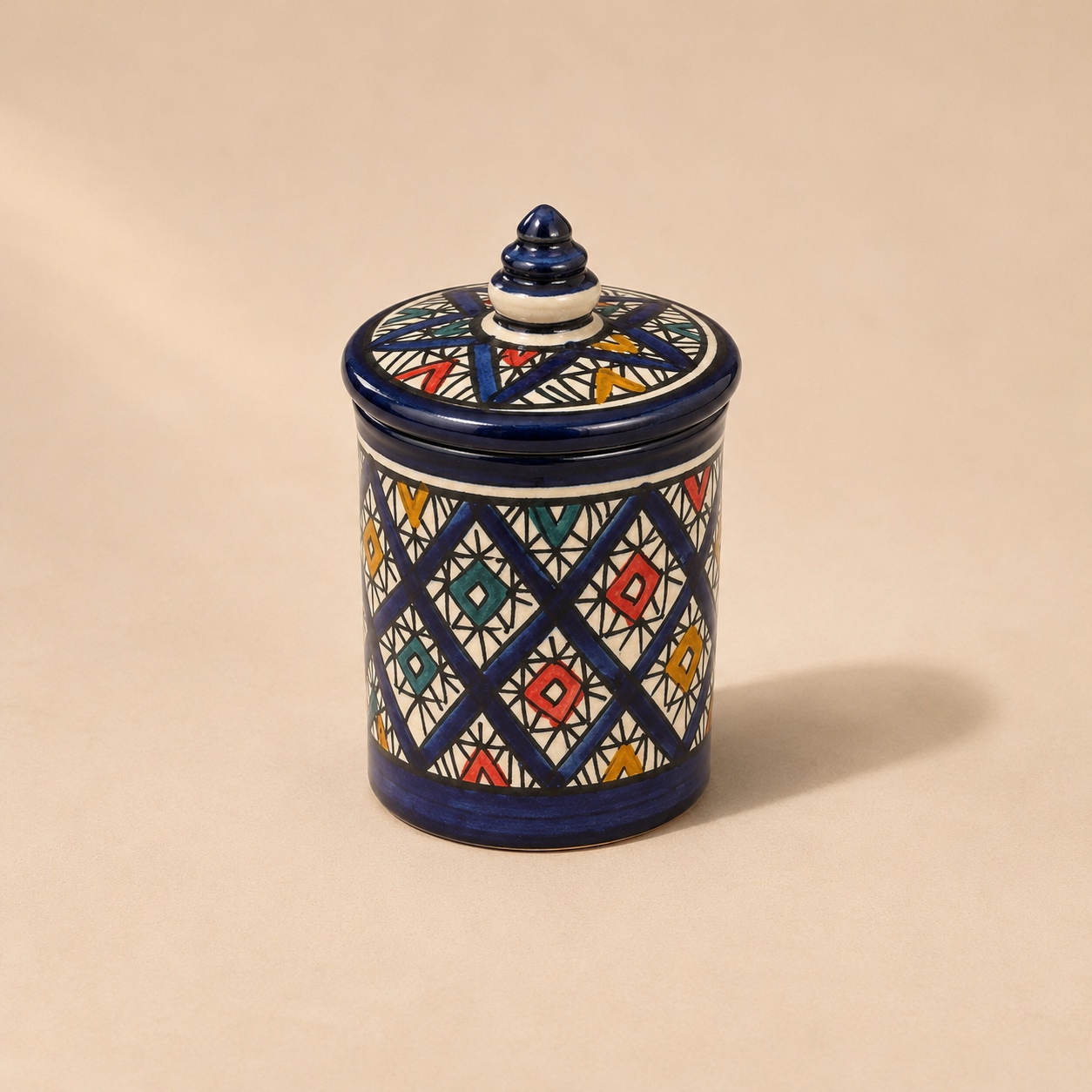
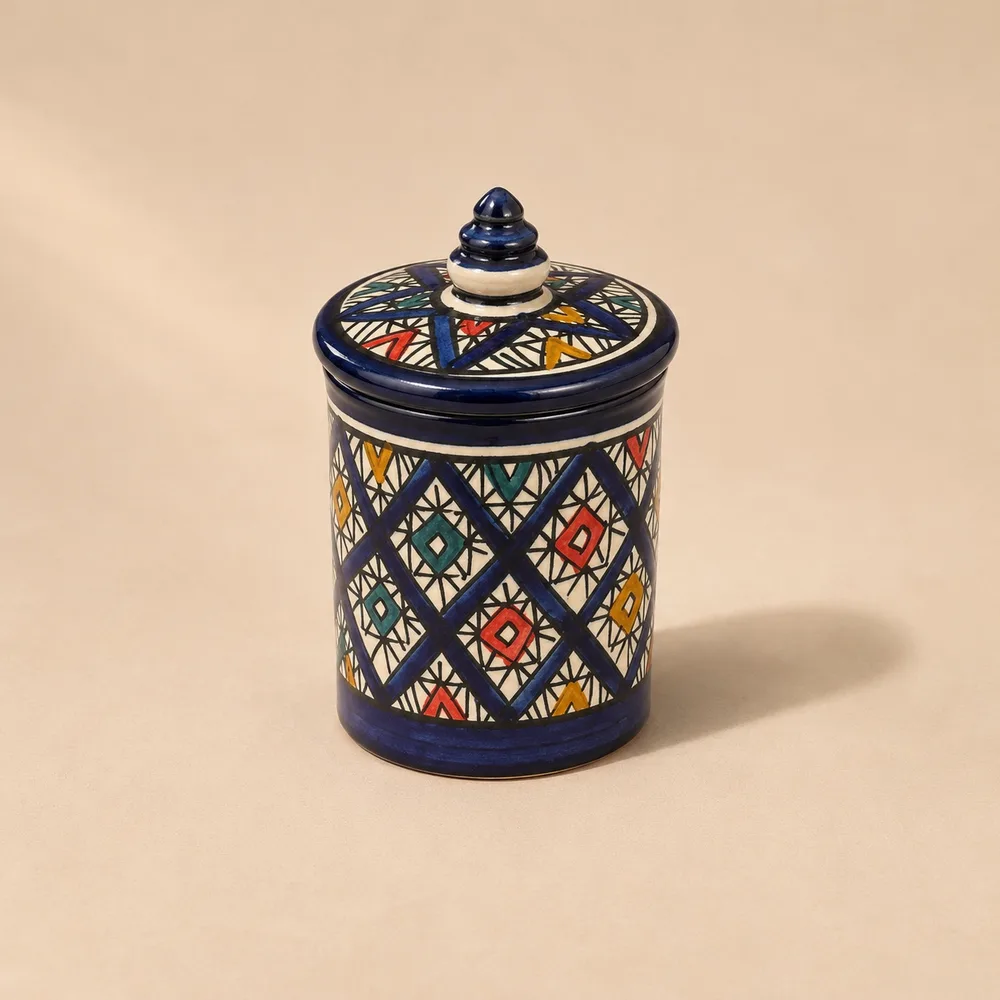
Midnight Diamond Lidded Jar
Ceramic lidded jar, midnight blue diamond pattern
70 MADView
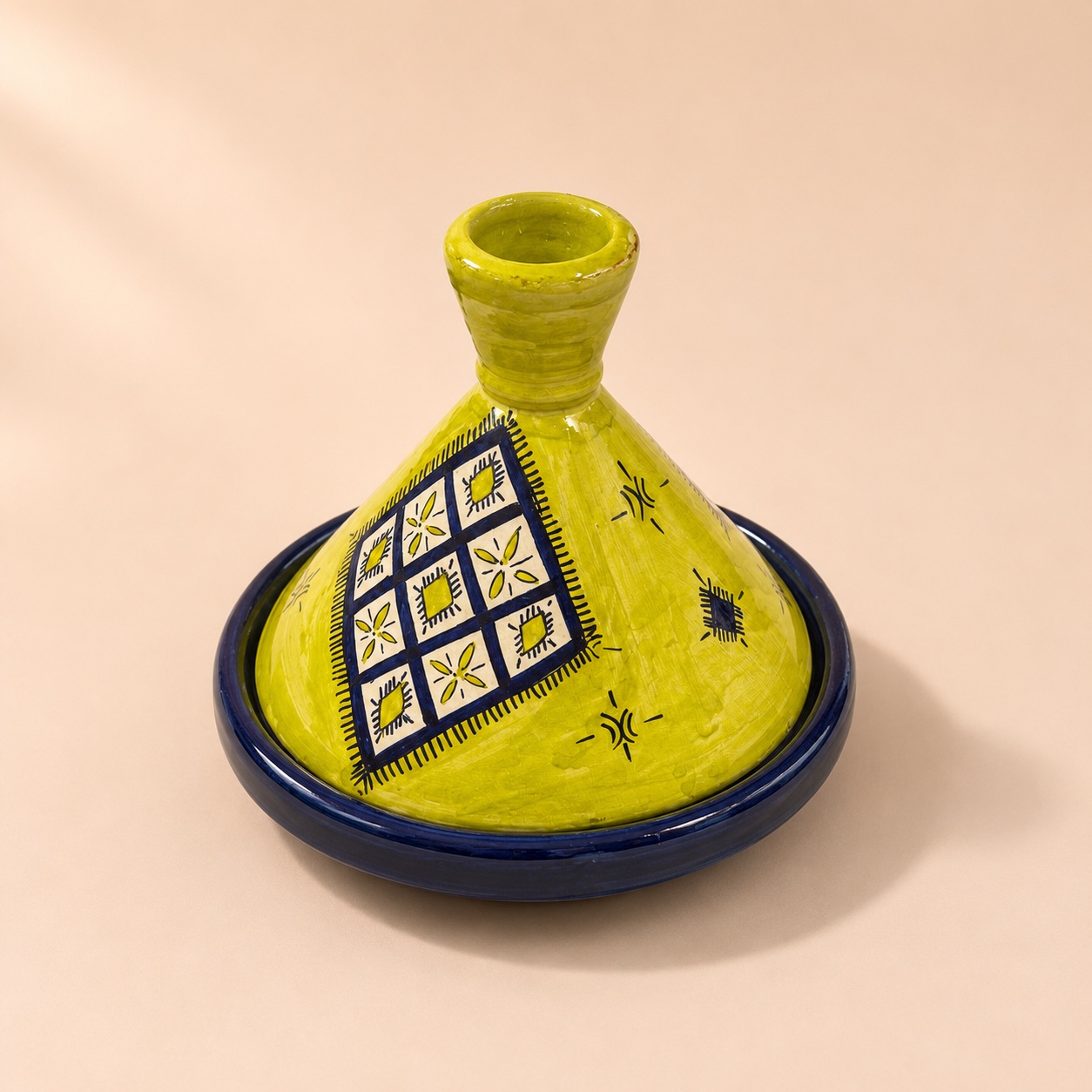
Lime and Midnight Checkerboard Tagine
Decorative ceramic tagine, lime green and midnight blue
200 MADView
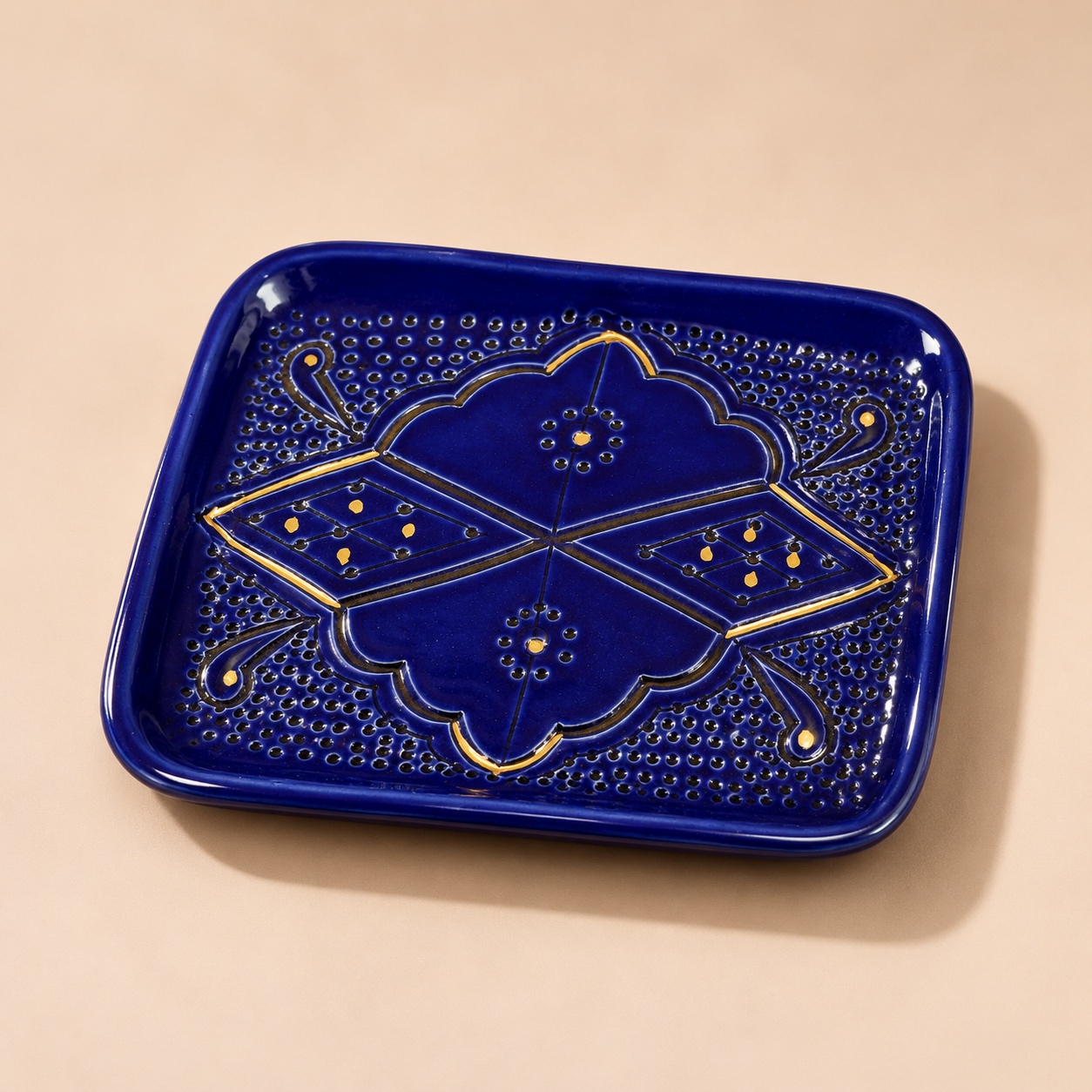
Cobalt Double Diamond Tray
Square cobalt blue ceramic tray, carved double diamond
160 MADView
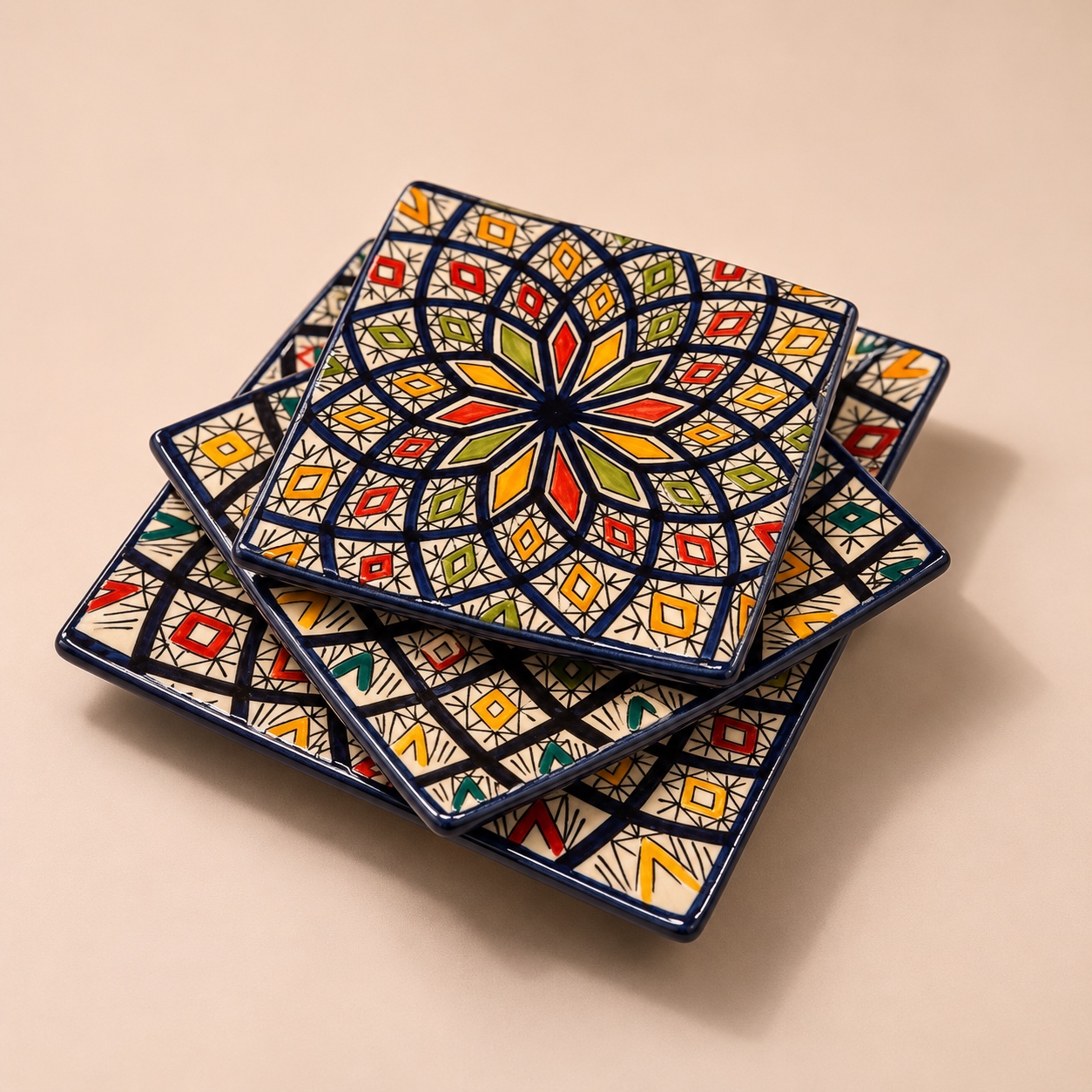
Three Multicolour Rosette Square Dishes
Three square ceramic dishes, multicolour rosette pattern
250 MADView
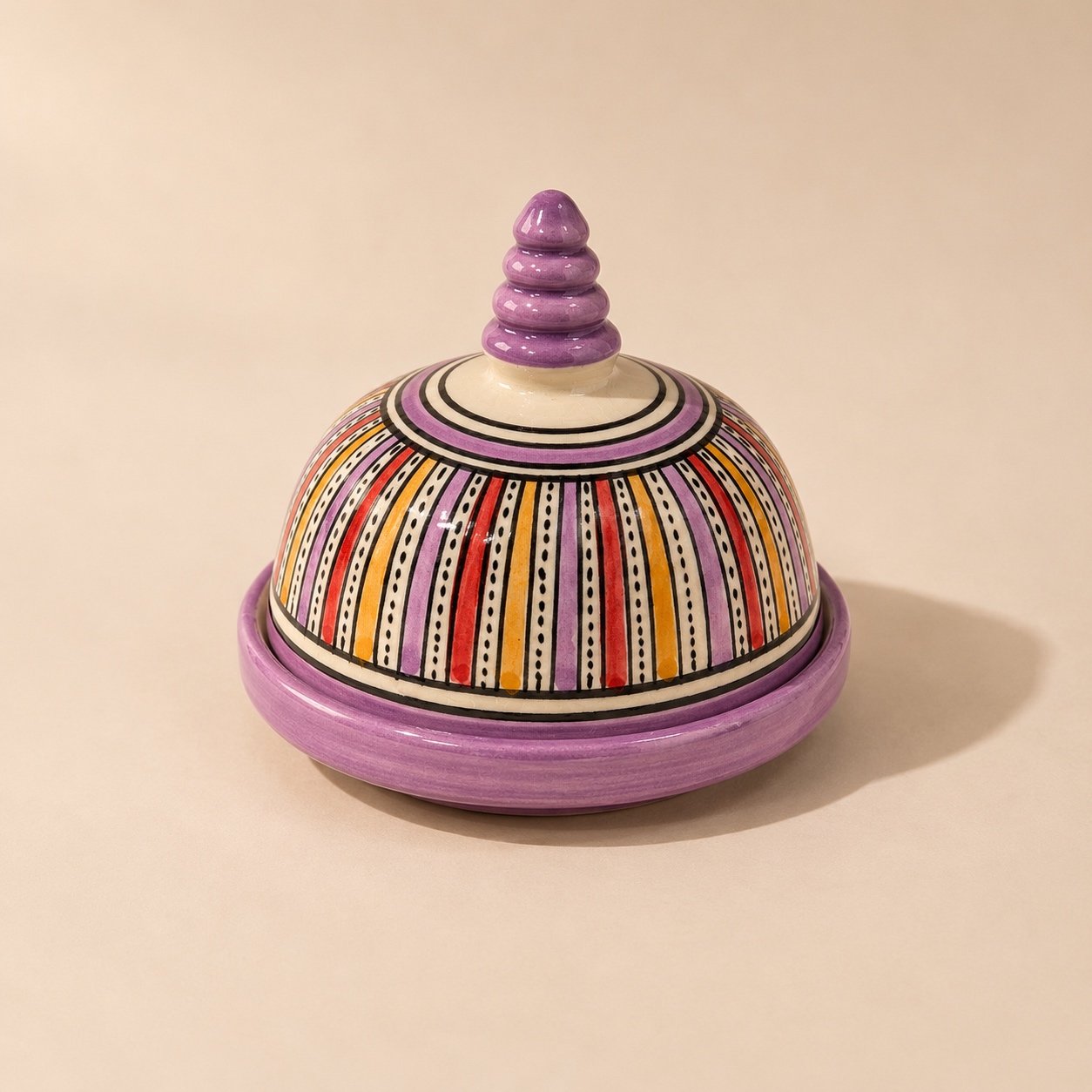
Lilac Striped Domed Dish
Ceramic domed covered dish, lilac and multicolour stripes
120 MADView
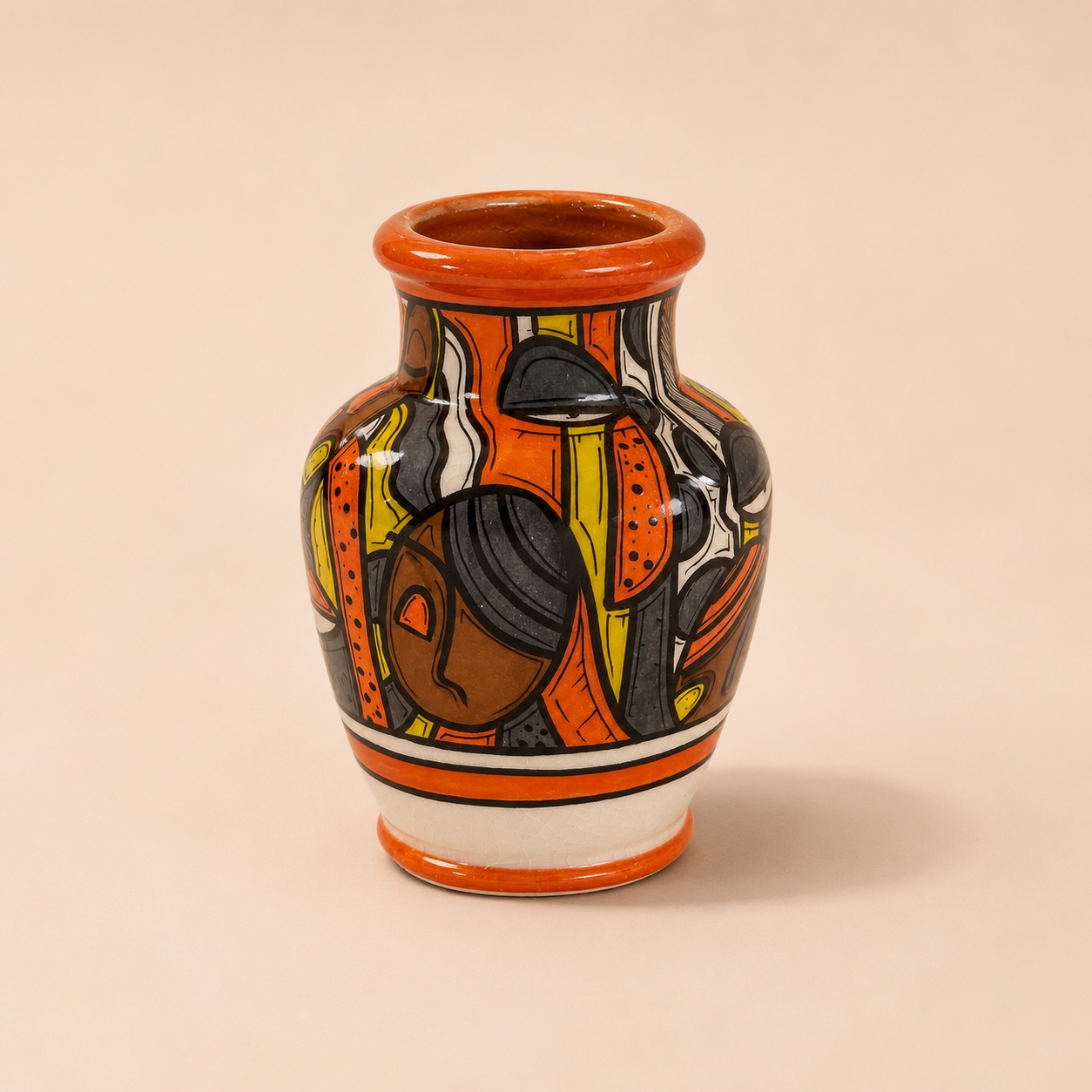
Orange Rim Faces Vase
Ceramic vase with painted faces, orange rim
170 MADView
Want one of these, or a question first?Order on WhatsApp
Which objects give a home a Moroccan touch?
Moroccan decor is recognisable first by its materials, glazed earthenware, metal, wood, wool, and by its patterns: rosettes, diamonds, stars, hand-painted stripes. Ceramics bring both together: the colour of a glaze and the precision of a pattern, in a size that fits anywhere.
The six families below run from the practical storage piece to the piece you simply look at.
1. Lidded jars: colour on a shelf
The lidded jar, topped with a small shaped knob, is one of the most common forms in Moroccan decorative ceramics. On a shelf it draws a vertical line of colour; two or three of different heights make a small scene.
Our Midnight Diamond Lidded Jar sets midnight blue diamonds around red, yellow and green motifs. The Sky Blue Shoal Jar alternates sky blue and ivory bands painted with fish.
Why choose it? A piece that decorates and stores, on its own or as a pair.
2. Decorative tagines: a Moroccan silhouette
The tagine's cone is one of the most recognisable shapes of Morocco. As a decorative piece it keeps the silhouette and becomes a canvas for colour: checkerboards, stripes, petals.
Our Lime and Midnight Checkerboard Tagine puts a lime green checkerboard lid on a midnight blue base. For a smaller format, the Red Striped Mini Tagine fits on a bedside table or a desk.
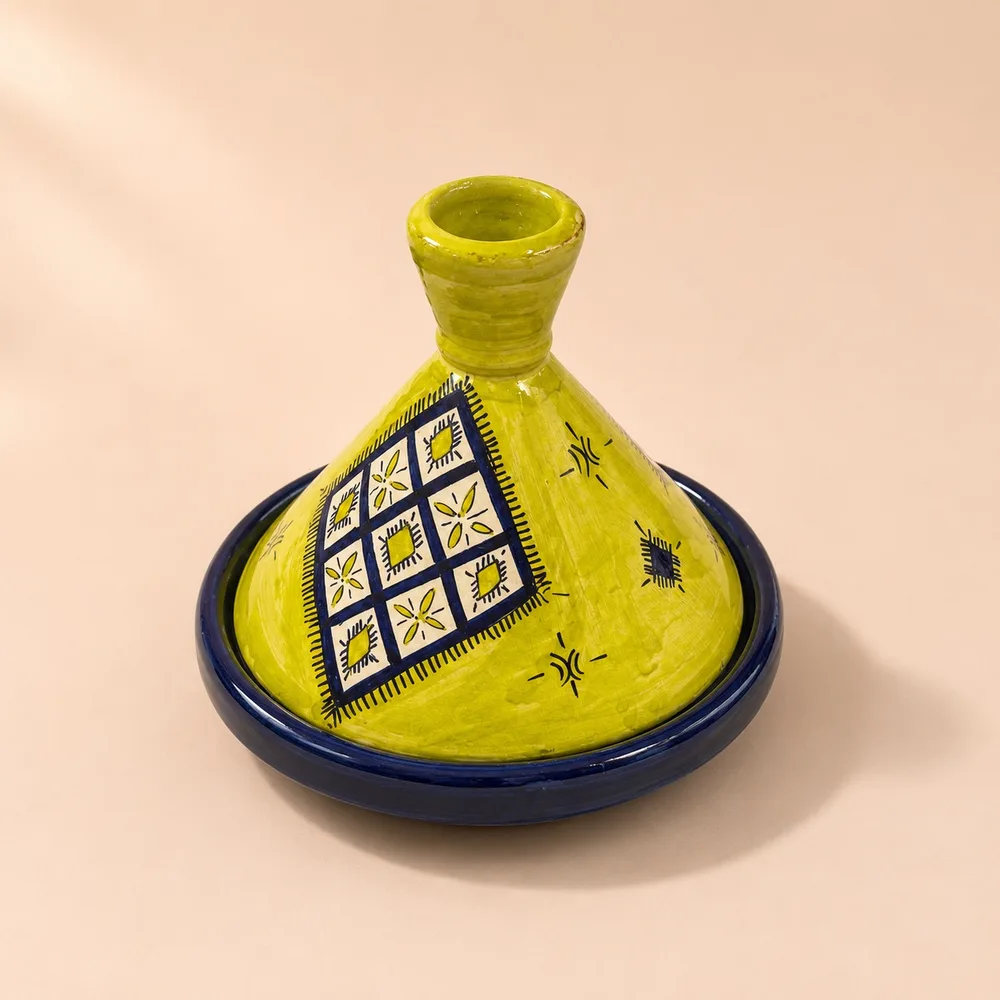
Why choose it? A shape instantly linked with Morocco, as a centrepiece or a small reminder.
Midnight Diamond Lidded Jar
Ceramic lidded jar, midnight blue diamond pattern
70 MADView
Lime and Midnight Checkerboard Tagine
Decorative ceramic tagine, lime green and midnight blue
200 MADView
Cobalt Double Diamond Tray
Square cobalt blue ceramic tray, carved double diamond
160 MADView
Three Multicolour Rosette Square Dishes
Three square ceramic dishes, multicolour rosette pattern
250 MADView
Lilac Striped Domed Dish
Ceramic domed covered dish, lilac and multicolour stripes
120 MADView
Orange Rim Faces Vase
Ceramic vase with painted faces, orange rim
170 MADView
Want one of these, or a question first?Order on WhatsApp
3. Carved trays: to display, set down or hang
In Morocco, the tray goes with welcoming guests and serving tea. In ceramic, its carved surface becomes a decoration in its own right: objects set on a console, a tray leaning against a wall, or hung.
Our Cobalt Double Diamond Tray draws a carved double diamond outlined in gold on a cobalt blue ground. The Long Sage Blossom Tray, sage green with a gold rim, carries a carved flower in relief.
Why choose it? For relief and a touch of gold that change with the light of the day.
4. Plates and dishes: a wall display
Hung as a group, painted plates make a very Moroccan wall. Rosettes, built out from a centre, read from a distance and give a wall its rhythm.
Our Three Multicolour Rosette Square Dishes, in three sizes, can be stacked on a shelf or hung with plate hangers. The Olive Rosette Plate Pair is painted with an olive green rosette and ochre details.
Why choose it? To dress a wall in one step, with no furniture or works.
5. Domed dishes: a small piece with character
The domed dish, covered by a dome topped with a knob, echoes the tagine in miniature. On a dressing table or in an entrance, it keeps small everyday things.
Our Lilac Striped Domed Dish pairs a lilac base with multicolour stripes.
Why choose it? An everyday object that keeps a real decorative presence.
6. The vase and the faces: ceramics of today
Alongside geometric patterns, a more recent strand of Moroccan ceramics paints stylised faces in flat colours. These pieces sit easily in a contemporary interior or next to an art collection.
Our Orange Rim Faces Vase is painted with modern faces in warm tones. The Grey and Lime Face Jar splits a face into two colours.
Why choose it? To show that Moroccan craft can also be graphic and current.
What do the patterns of Moroccan ceramics mean?
The patterns fall into a few broad families. Rosettes and stars come from the geometric art also found in zellige tilework and carved wood: one figure repeated around a centre. Diamonds and checkerboards structure a surface. Brush-painted stripes give movement to round shapes.
Colours vary with workshops and regions: Fez is associated with blue patterns on a white ground, Safi with polychrome ceramics. The small variations of a hand-painted piece are part of its character.
How do you combine Moroccan ceramics with a contemporary interior?
Three pointers are usually enough:
- Pick one main colour. Midnight blue, green or ochre, repeated on two or three pieces, ties the objects together.
- Leave space. A painted piece reads best against a calm background: a light wall, a wooden shelf, a clear console.
- Mix shapes. A tall jar, a flat tray and a round tagine make a livelier group than three identical pieces.
Which piece of Moroccan decor should you give?
| For | Our suggestion |
|---|---|
| Someone who loves colourful objects | A lidded jar with diamonds or fish |
| A first souvenir of Morocco | A mini decorative tagine |
| A minimalist interior | An ivory or sage green carved tray |
| A contemporary art lover | The faces vase or jar |
| A housewarming | A set of dishes to hang |
Our ceramics are decorative pieces: they are chosen for decoration, not for serving food.
With Souvenir Express
Orders are packed ready to give and delivered free within 24 hours anywhere in Morocco, to a home, an office or a hotel reception. An express option delivers in under an hour, for a fee shown at checkout.
You pay on delivery, or finish your order on WhatsApp. A product can be returned within 7 days of delivery: we come and collect it free of charge.
Discover our handcrafted selection
FAQ
How do you get a simple Moroccan decor look?
Start with one or two strong pieces, a lidded jar, a decorative tagine or a carved tray, in a colour you repeat elsewhere in the room.
Which objects are typical of Moroccan decor?
Painted ceramics, trays, decorative tagines, chased metal, rugs and woven textiles are among the objects most associated with Moroccan decor.
Can you hang Moroccan plates on a wall?
Yes. Plate hangers let you build a wall display; a set of dishes in different sizes gives a balanced result.
Can a decorative ceramic be used at the table?
It depends on the use stated for the piece. A plate or bowl shape alone does not show that an object is meant for food contact; our ceramics are offered as decorative pieces.
How do you care for a decorative ceramic?
A soft, slightly damp cloth is enough. Avoid abrasive products, which can dull the glaze and the gold lines.